Gear Notes
Why Our Kettlebells Are Cast, Not Filled
September 14, 2026 · Theo, Lifting coach
On a product photo, most kettlebells look the same: a ball, a handle, a number. On the floor, after a year of swings, they don't. Ours are cast in one piece of iron. Here's why we refused to make them any other way.
What "Filled" Means
Many cheaper bells are a plastic or thin metal shell filled with sand or concrete. Others weld a separate handle onto a body. Both are lighter to make and cheaper to ship. Both share the same problems: the weight sits in the wrong place, the handle can creak or loosen, and a drop on a hard floor can crack the shell. A filled bell also changes size with weight in odd ways, so every jump in weight feels like learning a new tool.
What Casting Gives You
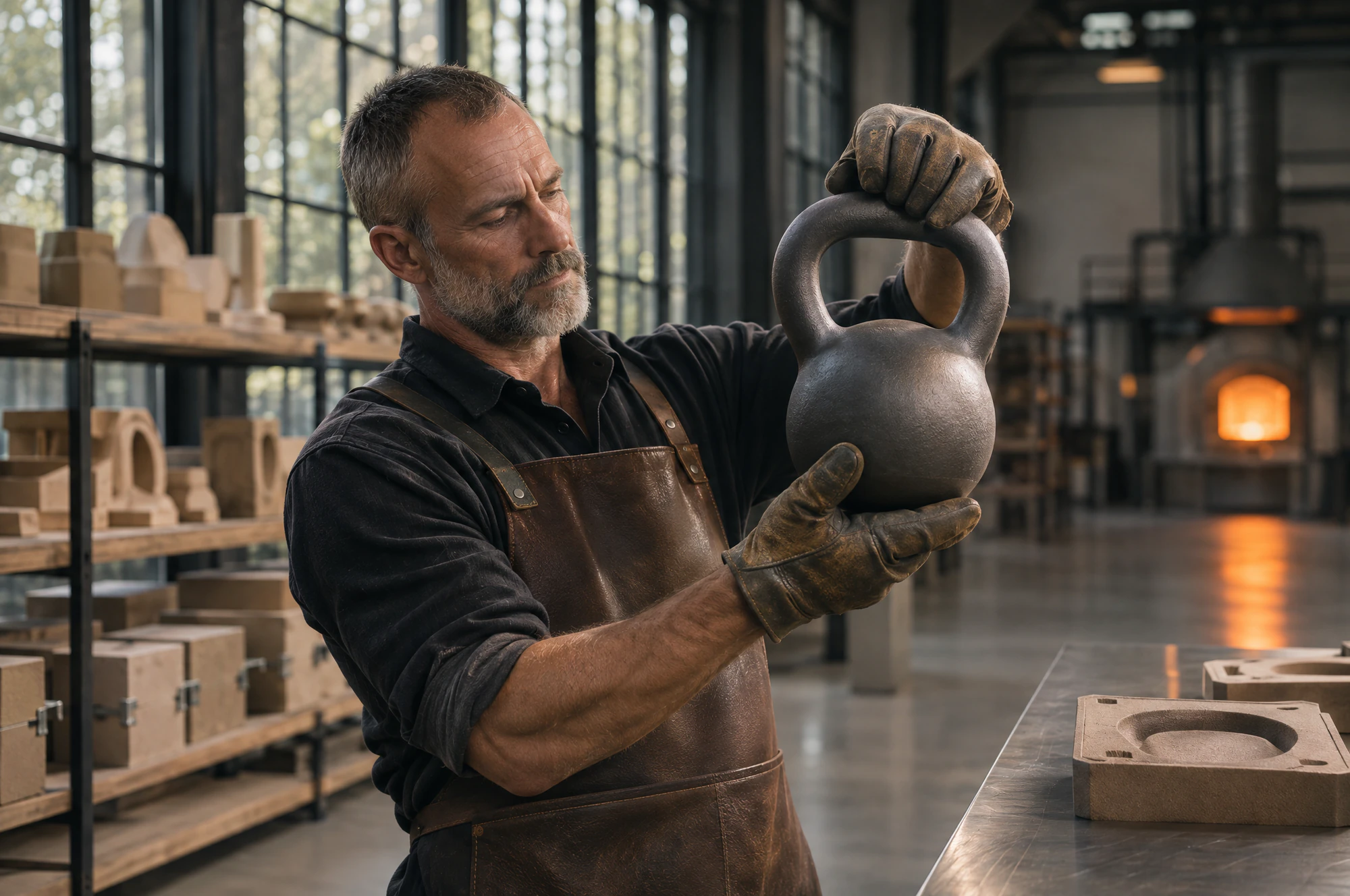
A cast bell is poured as one solid piece of iron into a sand mould, then ground smooth. That gives you three things you feel in every set.
- Nothing to come loose. No weld, no seam, no filling. The handle and the body are the same piece of metal.
- The weight where it should be. The centre of mass sits low in the bell, so swings and cleans track the same way every time.
- It survives the floor. Bells get dropped. Ours have been dropped thousands of times in the garage and the worst they show is a scuff in the coating.
The Details We Fussed Over
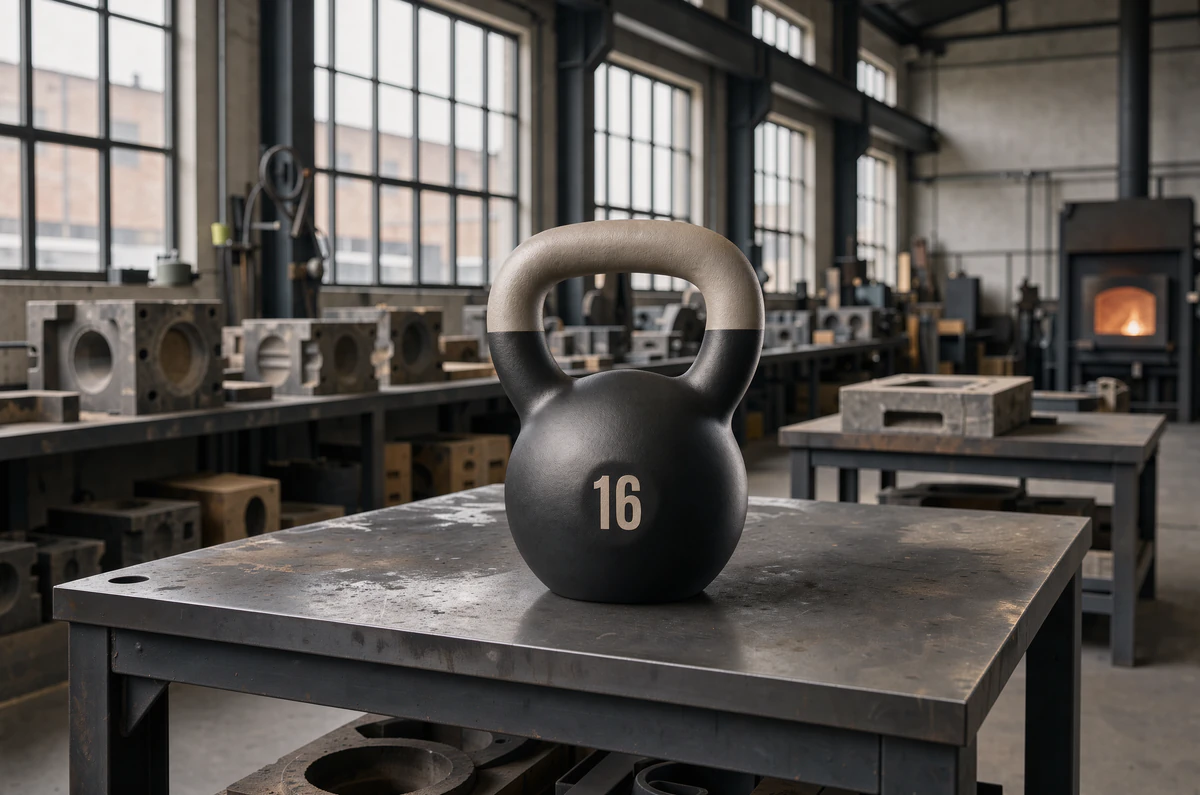
The handle is wide enough for two hands in a swing and smooth enough not to tear your palms in high reps. The window under it is large enough for a goblet squat grip without crushing your fingers. The powder-coat finish grips without chalk and doesn't flake when it meets the floor. Amara swings every new batch before it goes on sale — she has rejected two batches so far, both for handles a millimetre too thick.
Why It Matters To You
A kettlebell is one of the few pieces of gear you buy once. Cast iron doesn't wear out, doesn't need servicing and will outlast your training career. The extra cost is in the pouring and the grinding, and you get it back in the twentieth year.
A kettlebell should be the most boring thing you own. Nothing to adjust, nothing to break, nothing to think about.— Theo, lifting coach
The Cast Kettlebell comes in 16, 24 and 32 kg, cast in one piece with a wide handle and a powder-coat finish. We trained with the first one for three months before we sold any. It's still on the garage floor, still the same.