
Fuel
Sleep Is A Supplement Too
July 20, 2026 · Inès, Mobility coach
Every week someone asks me which supplement will help them recover faster. My answer is always the same, and it costs nothing: sleep. Seven to nine hours, most nights, at roughly the same time. No powder in our shop does as much.
Why It Matters For Training
Training is the stimulus; recovery is where you actually get stronger. Most of that repair happens while you sleep. That is why the coaches here guard their own sleep as carefully as their training plans. Short nights make heavy sets feel heavier, slow your reactions and make you hungrier the next day. Lifters who sleep badly don't just feel worse — they progress slower, whatever they eat.
Habits That Work
None of these are new. They work because they are boring and repeatable.
- Same time, every day. Going to bed and getting up at the same time — weekends included — matters more than any single long night.
- Dark, cool, quiet. A cool room, blackout curtains, the phone outside the bedroom or at least face down and silent.
- Caffeine before noon. A late pre-workout or an afternoon coffee can cost you an hour of deep sleep without you noticing.
- Wind down for twenty minutes. A few gentle stretches on the mat, a book, dim light. Your body needs a signal that the day is over.
- Train earlier when you can. A hard session finishing at nine can keep you awake until midnight. If evenings are your only time, end with a slow cool-down.
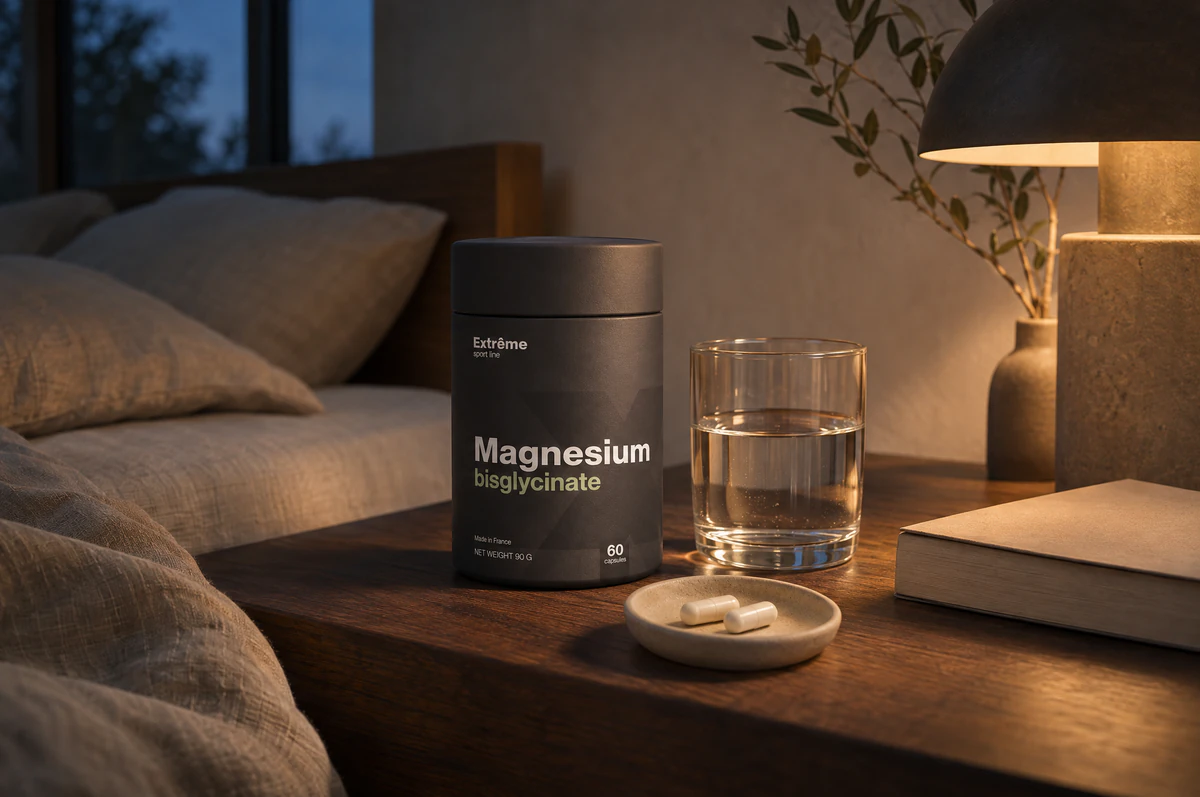
Where Supplements Fit
Magnesium is involved in muscle and nerve function, and many active people don't get much from food. Some people find a bisglycinate capsule in the evening helps them feel calmer before bed; others notice nothing. A daily mineral complex fills gaps when your diet isn't varied. Neither will fix a late screen, a late coffee or a stressful week. If you sleep badly for weeks, see a doctor — it's worth more than any capsule.
Naps help if you keep them short: twenty minutes in the early afternoon, not an hour at six in the evening. And think in weeks, not nights — one long Saturday lie-in won't undo five short nights before it.
You don't get stronger in the gym. You get stronger in bed, eight hours later.— Inès, mobility coach
If you want an evening routine to hang the habit on, Magnesium — 300 mg per serving, vegan capsules — and a daily Mineral Complex are the two I'd consider. But start with the alarm: set a bedtime, not just a wake-up time.